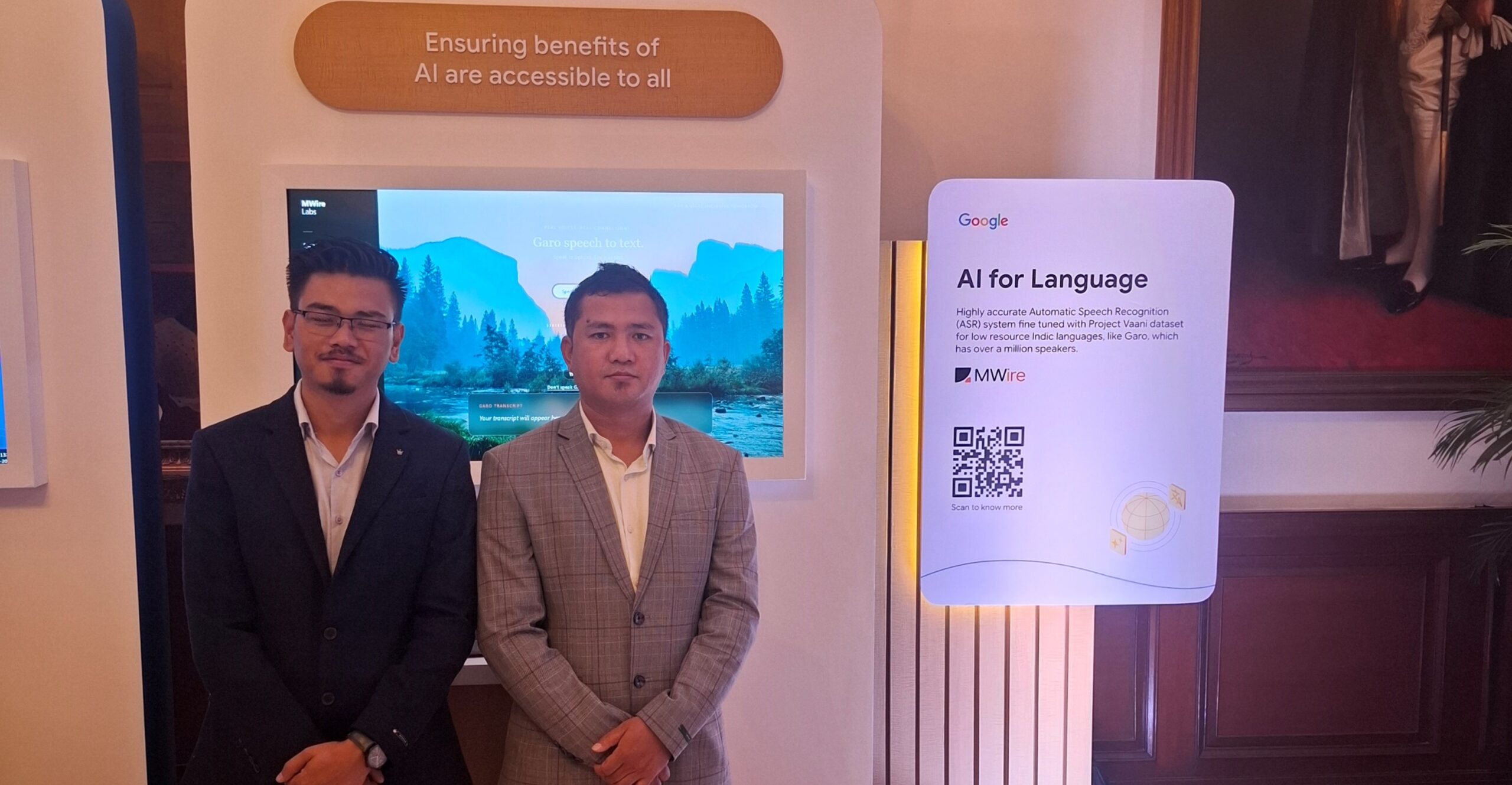
On 12 October, we stood in New Delhi and showed Garo speech-to-text working live.
Garo is spoken by more than a million people across Meghalaya and Assam. Until now, almost none of that speech could be typed, searched or transcribed by a machine. Most AI systems simply do not hear it.
Our team in Shillong set out to change that. We built a Garo speech-to-text model and released it openly. It is the first publicly available speech-to-text model for Garo. At Google’s Lab to Impact, we ran it in front of policymakers, industry leaders and the media. Speak in Garo, and the text appears.
The numbers matter, but they are not the point. Against zero-shot Whisper-small, the model cuts word error rate by 97.5% relative, down to 9.74%. What matters more is that a Garo speaker can now talk to a computer in their own language.
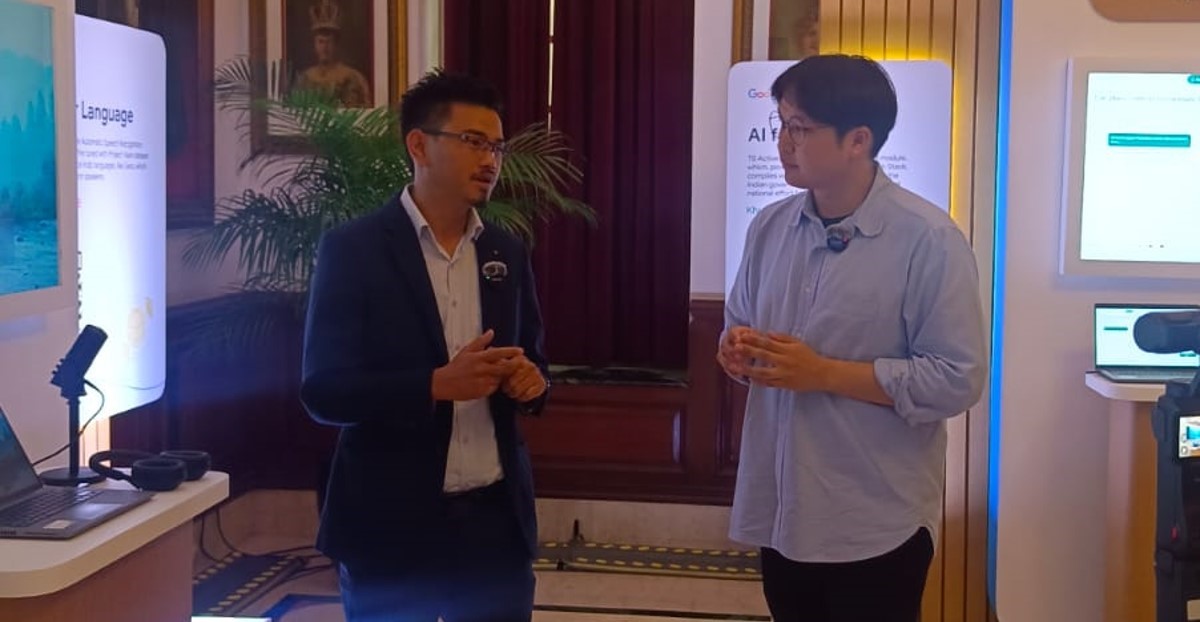
We trained it on conversational speech from Project Vaani, led by IISc and ARTPARK with support from Google. We are grateful to the team that made that data possible.
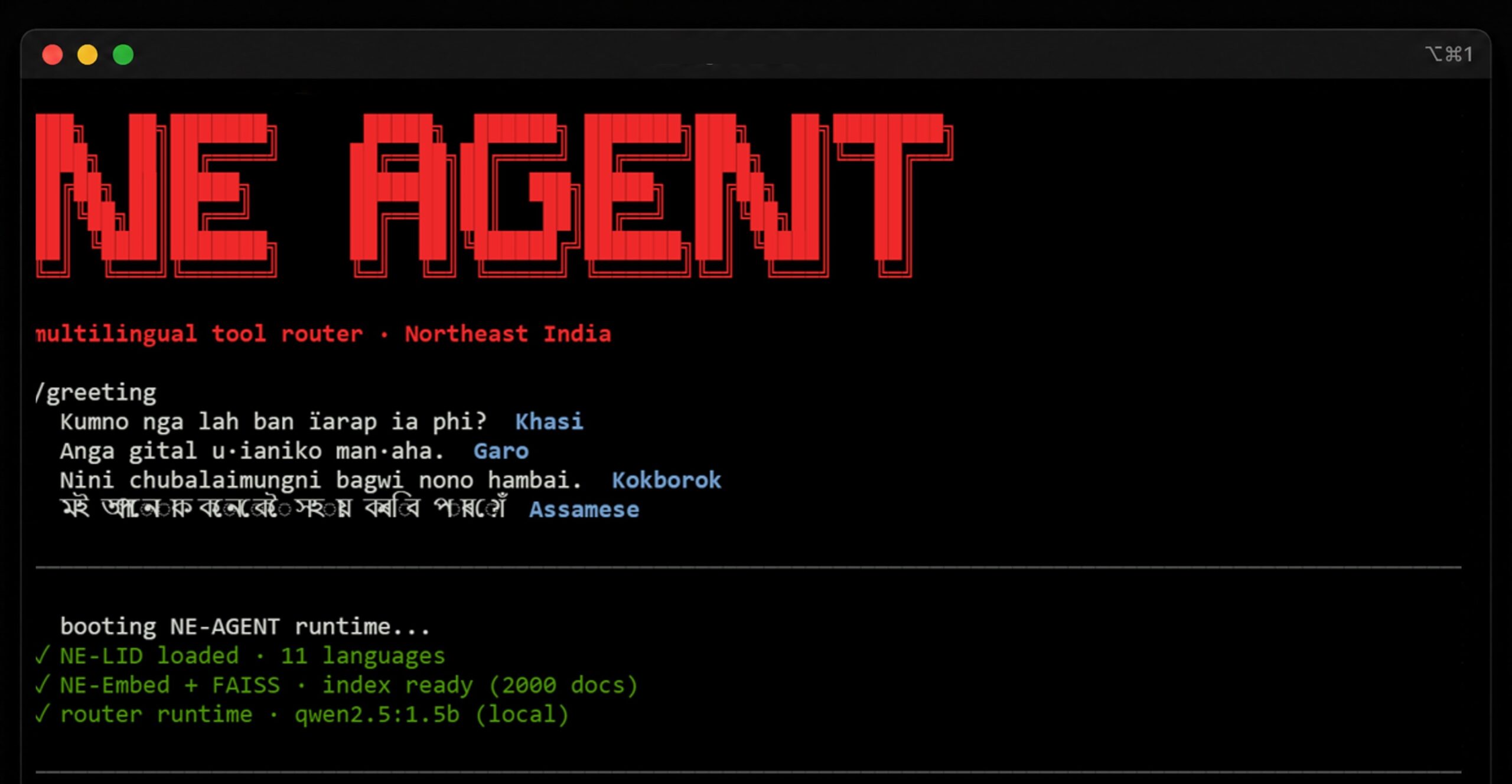
This is one step in a bigger job. We are building language AI for the 220+ languages of the Northeast, one language at a time. Garo is part of Lemka, our voice stack for six languages: Khasi, Garo, Mizo, Meitei, Nagamese and Kokborok.
The model is free to use on Hugging Face. If you want to build with Garo, or bring your own language next, talk to us.